
Cultural revolution in whale songs |
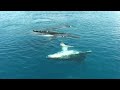
Humpbacks have picked up a catchy tune sung by immigrants from a distant ocean. http://www.youtube.com/watch...
"Humpback whale song shows similarities to song in some birds, particularly the
Panamanian yellow-rumped cacique (Cacicus cela vitellinus)
and village indigo bird
(Vidua chalybeata), in which song repertoires are colony-specific and all individuals
have similar repertoires which change with
time. But there are no examples of radical
song replacement initiated by a small number of immigrant individuals in these or any
other species of songbird."
- mkz
Biogeographic characterization of blue whale song worldwide: Using song to identify populations - http://cetus.ucsd.edu/Publica...
- mkz
Bir de soyle bir sey cikti, "revolution" degil de "evolution" gibi belki (okumadim bunu, yukaridaki bi sayfalik bir seydi, onu okuduydum): Cultural transmission of song patterns and dialect development in a free-living bird population - http://www.sciencedirect.com/science...
- mkz
Bu mevzuya (genel ilgincliginin yaninda) biraz da sundan sardirdim: Evcil hayvanlar "feral children" imisler gibi geliyor bazen. Bir "kulturun", "gelenegin" parcasi olacakken, kendi benzerleri arasinda dogal olarak ortaya cikmis davranis normlarina uyum saglayacak, belki "dil"ler ogrenecekken, bambaska bir turun davranislarina uyum saglamak durumunda kaliyorlar. Cok net de degilim bu konularda aslinda ("evcil hayvan sahibi olmak zulumdur", diye kestirip atamiyorum ornegin, ya da uzun sureli yapay seleksiyonun etkisini nasil seyetmek lazim bilemiyorum), ama biraz daha okuyup ogrenmekte fayda var gibi geliyor iste. Diger hayvanlarin da "kulturel zenginlikleri", nesilden nesile aktarilagelen "gelenekleri"/"folklorleri" var gibi gorunuyor (baska uygun kelimeler bilmedigim icin bunlari kullaniyorum, standart (insanlar icin olan) anlamlarinin diger hayvanlarda da aynen gecerli oldugunu varsaydigimdan degil).
- mkz
Mavi balinalarda benzer muhabbet: "Here's something interesting; blue whales actually have two subspecies, the Antarctic and the Pygmy, and the Pygmies seem to be broken into three groups which keep clear of each other and have very distinct vocalizations.
One question which isn't answered by this study is whether these vocalizations are inherited or learned; the former would suggest that the Pygmies are separating into subspecies with physical differences in their vocal tracts, while the latter would suggest essentially three distinct blue whale "tribes." If the difference were purely learned, and were coupled with other differences in learned behavior -- say, in krill-hunting techniques -- we could even meaningfully talk about distinct cultures." - https://plus.google.com/+Yonata...
- mkz
The Cultural Lives of Whales and Dolphins - http://press.uchicago.edu/ucp... - "In the songs and bubble feeding of humpback whales; in young killer whales learning to knock a seal from an ice floe in the same way their mother does; and in the use of sea sponges by the dolphins of Shark Bay, Australia, to protect their beaks while foraging for fish, we find clear examples of the transmission of information among cetaceans. Just as human cultures pass on languages and turns of phrase, tastes in food (and in how it is acquired), and modes of dress, could whales and dolphins have developed a culture of their very own?
Unequivocally: yes. In The Cultural Lives of Whales and Dolphins, cetacean biologists Hal Whitehead, who has spent much of his life on the ocean trying to understand whales, and Luke Rendell, whose research focuses on the evolution of social learning, open an astounding porthole onto the fascinating culture beneath the waves."
- mkz